

Hollow cheeks or a sunken appearance
What may helpDiscuss professional options with a qualified medical or aesthetic provider.
Losing weight on a GLP-1 can change more than the number on the scale. Facial volume loss can make skin appear looser, drier, more lined, or less firm. Here's what we know, and what you can actually do about it.
"Ozempic face" isn't a medical diagnosis or a proven side effect of Ozempic itself. It's a term used to describe visible facial changes that can occur during significant weight loss, especially loss of facial volume. Skincare cannot replace lost volume, but it can help improve the appearance of skin quality, including firmness, hydration, texture and fine lines.

Most facial changes during GLP-1 treatment fall into one of three categories, or a mix. Each one responds to different things.
The key distinctionTopical skincare can address skin quality. It cannot replace lost facial fat or facial volume.
The phrase spread as semaglutide and tirzepatide became common in diabetes care and weight management. It's media shorthand, not a medical diagnosis, and facial aging or facial volume loss is not identified as an adverse reaction in the current FDA-approved Ozempic prescribing information.8 It usually describes a cluster of visible changes that may accompany substantial or rapid weight loss:
Some people prefer "GLP face" or "GLP-1 face," since the same facial changes are reported across GLP-1 medications such as Ozempic®, Wegovy®, Zepbound® and Mounjaro®, and with rapid weight loss by any method.
When someone says their face "looks different" or their skin is "sagging," they're usually noticing one of these three things. Knowing which one you're seeing is the key to knowing what will actually help.
Skin quality is how skin looks and feels overall: hydration, firmness, texture, smoothness, radiance, tone, pores and fine lines. This is where a consistent topical routine is most relevant.
Volume is fullness beneath the skin. Topical skincare cannot replace lost facial volume. Volume concerns are a conversation for a qualified aesthetic provider.
Laxity is looseness or reduced support in the skin or underlying tissue, and it's what most people mean by loose skin after weight loss. Mild laxity overlaps with skin quality; deeper laxity is best evaluated by a provider.
| Approach | Skin qualityhydration, texture, lines, firmness | Volumefullness beneath the skin | Laxitylooseness, reduced support |
|---|---|---|---|
| Consistent skincarePeptides, hyaluronic acid, retinoids, antioxidants, daily SPF | Main option Where a topical routine is most relevant. |
Can't replace No topical restores lost fullness. |
Mild only Mild laxity overlaps with skin quality. |
| Everyday habitsProtein, resistance training, hydration, sun protection | Supports Hydration and daily SPF support skin quality over time. |
Indirect Discuss a healthy rate of weight loss with your clinician. |
Indirect Protein and resistance training help support muscle. |
| Professional treatmentBy a licensed provider: fillers, energy-based devices, microneedling, surgery | Some options Microneedling and energy-based devices. |
Main option Injectable fillers to restore volume. |
Main option Skin-tightening devices; surgery for significant loose skin. |
Plain-English definitions of each term are in our GLP-1 skin glossary.
Topical skincare can't restore lost facial volume. But it can address the visible quality of the skin itself.
DermaReverse was developed for visible skin-quality changes people may experience during a GLP-1 journey and evaluated in a peer-reviewed, placebo-controlled clinical study.
Options range from everyday habits and consistent skincare to professional procedures. The right approach depends on whether your main concern is volume, skin quality, or both.
Skincare during GLP-1 treatment can't change your weight or replace lost volume, but these ingredients can help skin look firmer, smoother and more hydrated:
For more pronounced changes, some people consult a board-certified dermatologist or plastic surgeon. These are medical procedures by licensed providers, not skincare, and may include:
Several factors may contribute, and they can overlap. Rapid facial fat loss is the best-established explanation. These changes are generally associated with significant or rapid weight loss rather than established as a direct effect of the medication.
Facial fat gives the skin underlying volume. The face contains fat compartments that contribute to a smooth, full appearance. When they shrink quickly, the skin over them can look deflated, looser or more lined.
Collagen and elastin help give skin its firm, resilient appearance, and their levels decline with age. After substantial or rapid weight loss, skin may not visibly adjust to smaller facial contours at the same pace, so lines or laxity look more noticeable.
Weight loss can include both fat and lean mass. Because muscle contributes to the underlying support of the face and body, clinicians often discuss adequate protein and resistance training as part of a medically supervised plan.
Healthy skin renewal depends on adequate nutrients including vitamin A and other micronutrients,7 and appetite, food intake and hydration can all change during GLP-1 treatment. Individual needs are best discussed with your prescribing clinician or a registered dietitian.
Researchers are examining whether GLP-1-based medications may influence skin biology in addition to producing weight loss. A 2024 review in Aesthetic Surgery Journal described GLP-1-related facial changes as potentially multifactorial, involving loss of dermal and subcutaneous fat, altered activity of adipose-derived stem cells, and downstream effects on the skin's supportive environment.1 GLP-1 is a signaling molecule with activity throughout the body,2 and laboratory and clinical research has shown that GLP-1 receptor agonists can act on keratinocytes and influence inflammatory signaling and wound-healing pathways.3,4 GLP-1 therapy has also been studied in connection with inflammatory skin conditions such as psoriasis,5 and broader safety literature continues to examine effects associated with this medication class.6
This provides a basis for continued research, but it does not establish that GLP-1 medications directly cause changes in human facial skin independent of weight loss.
There's no fixed timeline, and experiences vary. In general, visible facial changes track the pace and amount of weight loss: the faster or greater the loss, the more noticeable the change may be.
Facial changes usually aren't visible yet. Some people start a skincare routine here. Preparing your skin →
Some people notice differences as fat reduction becomes visible in the face. Others notice little or no change.
Some changes may soften once weight stabilizes; others may persist. A realistic timeline →
Concerned about the pace of your weight loss? Speak with your prescribing clinician. Do not change your medication, dose or schedule to address a cosmetic concern without medical guidance.
There isn't enough long-term clinical evidence to predict how often these changes improve after weight stabilizes. Some visible changes may soften, while others may persist. What happens over time depends on:
We go deeper in Does Ozempic face go away? and Skin after stopping a GLP-1.
You may be more likely to see noticeable facial changes if you:
None of these factors guarantees a change. Individual experiences vary, and the changes described by the term are cosmetic rather than a medical diagnosis.
The visible changes overlap, which is why they can be hard to tell apart.
Age-related loss of facial volume and skin quality typically develops slowly.
Changes often track the pace of weight loss.
In practice the concerns look similar (less fullness, more noticeable lines, skin that appears less firm), and many of the approaches that support appearance overlap.
Most skincare marketed to GLP-1 users is general-purpose skincare with a new label. DermaReverse was evaluated in a published clinical study in people using GLP-1 therapy.


Photographs are of a single study participant and have not been retouched. Individual results vary.
This was a pilot study. A split-face design is unusually informative per participant because it removes person-to-person variation, but it is one study. It evaluated DermaReverse's cosmetic effects in GLP-1 users; it was not designed to determine what caused participants' underlying skin concerns. Aforé sponsored the study.
Claims for skincare marketed to GLP-1 users are typically supported by consumer perception surveys, studies of a single ingredient rather than the finished formula, or results that are summarized but never published in full. DermaReverse's study:
One serum. 13 measured skin-quality parameters. Six weeks of clinical evaluation.
DermaReverse is a twice-daily cosmetic serum designed to support the appearance of firmer, smoother, more hydrated, resilient-looking skin during and after significant weight change. Aforé developed it specifically for visible skin-quality changes during a GLP-1 journey, rather than adapting a general anti-aging product.
Explore DermaReverse →Cosmetic skincare cannot restore facial volume or replace medical or aesthetic treatment. Individual results vary. DermaReverse is a topical skincare product, not a drug.
That has not been established. Substantial or rapid weight loss can reduce facial fat and make skin look looser or more lined, whether the weight loss occurs with GLP-1 therapy or another method. Emerging research is exploring whether GLP-1-based medications may also influence skin biology, but direct effects on human facial skin independent of weight loss have not been proven.
There is no fixed timeline. Visible facial changes generally track the pace and amount of weight loss. Some people notice differences within the first several months as fat reduction becomes visible in the face; others notice little or no change.
There is limited long-term evidence, and experiences vary. Some visible changes may soften after weight stabilizes, while lost facial volume or more pronounced laxity may persist. Skincare can support the appearance of firmness, smoothness and hydration, but it cannot replace lost facial volume.
Not necessarily, but there is not enough long-term evidence to predict an individual outcome. Age, skin elasticity, the amount and pace of weight loss, and whether the primary concern is volume or skin quality all influence how appearance evolves.
Skincare cannot change your weight or replace lost facial volume. It can support visible skin quality. Ingredients such as peptides, hyaluronic acid, retinol and antioxidants can help skin look firmer, smoother and more hydrated as part of a consistent routine. DermaReverse was the first topical skin solution designed for GLP-1 users to be the subject of a peer-reviewed, medical-journal-published study.
No approach can guarantee prevention. Common supportive steps include discussing an appropriate rate of weight loss with your clinician, eating adequate protein, resistance training when medically appropriate, staying hydrated, daily sun protection and a consistent skincare routine. For volume loss or pronounced laxity, a qualified aesthetic provider can discuss professional options. Do not change your medication or dose without speaking with your prescriber.
The visible changes people describe as "Ozempic face" are associated with substantial or rapid weight loss rather than one brand. Similar changes are reported across GLP-1 and GIP/GLP-1 medications and across rapid weight loss by any method.
Volume is the fullness beneath the skin, mostly from facial fat. Skin quality is how the skin itself looks and feels: hydration, texture, firmness, fine lines and radiance. Topical skincare can address skin quality; it cannot replace lost facial volume, which is a conversation for a qualified aesthetic provider.
Each guide answers one question in depth.
Showing 14 of 14 guides
Disclaimer: Aforé and DermaReverse are independent and are not affiliated with, endorsed by, sponsored by, or connected to the makers of any GLP-1 medication. Ozempic® and Wegovy® are registered trademarks of Novo Nordisk A/S, and Zepbound® and Mounjaro® are registered trademarks of Eli Lilly and Company. Aforé claims no ownership of these marks; they are used here only to identify the medications discussed. All other trademarks are the property of their respective owners. "Ozempic face" is an informal, non-medical term and is not a diagnosis. This page discusses cosmetic, appearance-level changes in facial volume and skin quality; it does not establish that any medication causes a disease, medical condition, or specific cosmetic change. References to scientific research are provided for general educational context and include an emerging and evolving area of study. Aforé is a cosmetic skincare company; this content is not medical advice and is not a substitute for consultation with a qualified healthcare provider. Do not change any medication, dose, or treatment plan without speaking with your prescribing clinician. None of Aforé's products are intended to diagnose, treat, cure, or prevent any disease. Individual results vary.
A simple morning routine for skin that's changing on a GLP-1. Cleanse, then these three, in this order. In the evening, use the first two and skip the SPF.
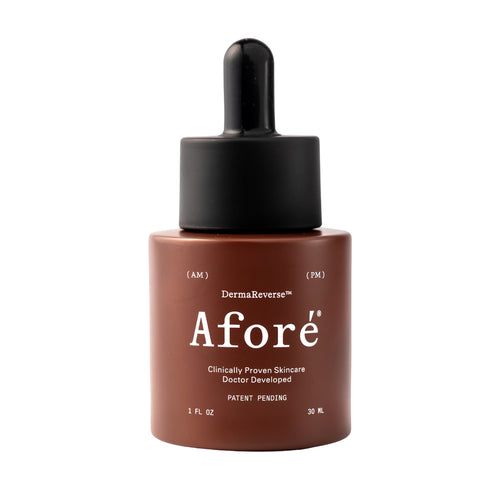 Step 1
DermaReverse
$145 or $99/month with a subscription
First, on clean, dry skin. 3 to 4 drops over face, neck and décolletage.
Step 1
DermaReverse
$145 or $99/month with a subscription
First, on clean, dry skin. 3 to 4 drops over face, neck and décolletage.
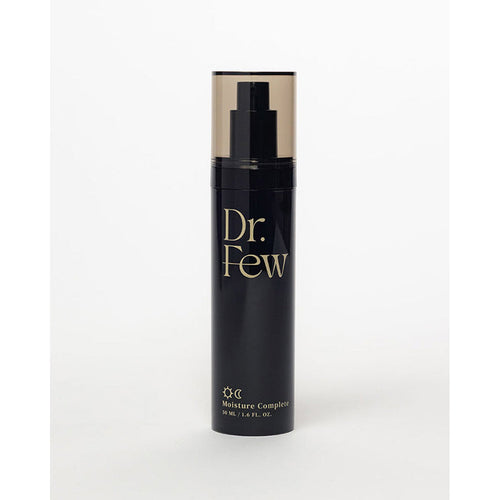 Step 2
Moisture Complete
Step 2
Moisture Complete
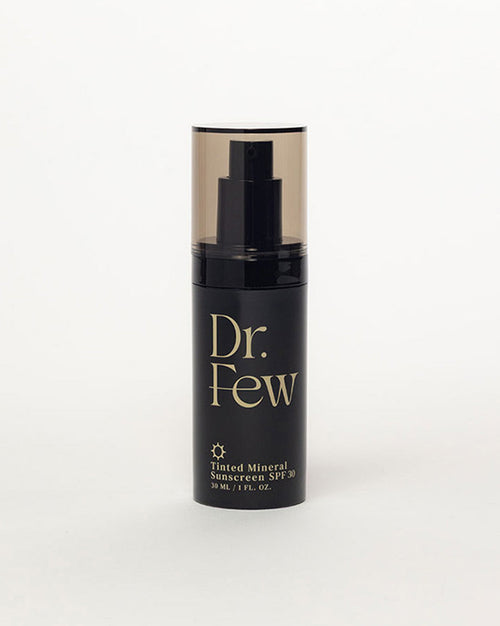 Step 3
Tinted Mineral Sunscreen SPF 30
Step 3
Tinted Mineral Sunscreen SPF 30
All three: $265
DermaReverse is added as a one-time purchase. Prefer a subscription? Start on the DermaReverse page.